50 عامًا من مبادئ منظمة التعاون الاقتصادي: الإسهامات والقيود وما هو المطلوب في المستقبل
توصيات لمنظمة التعاون الاقتصادي والتنمية والحكومات الأعضاء بشأن تنفيذ المبادئ التوجيهية مستقبلاً



OECD Watch works together with civil society to strengthen financial institutions’ accountability for their impacts on people and the planet through our three key workstreams.
We advise civil society organisations and communities bringing complaints against different types of financial institutions, covering a wide range of impacts across their value chains. NCP complaints involving the financial sector have played an important role in clarifying financial institutions’ responsibilities for human rights, labour rights, climate change, environmental harm, and other adverse impacts.
We have successfully advocated for stronger OECD guidance clarifying financial institutions’ due diligence responsibilities. We continue to contribute civil society perspectives to the OECD’s research, guidance, and policy development that is relevant to responsible business conduct in the financial sector.
Together with our network members and partners, we advocate for robust corporate accountability legislation aligned with the OECD Guidelines that explicitly includes financial institutions. Such legislation must require financial institutions to identify and address adverse impacts across their value chains, including those connected to their financing and investment activities.

The OECD Guidelines apply to all sectors, including financial institutions such as banks, institutional investors, asset managers, pension funds, and insurance companies. Financial institutions are expected to conduct risk-based due diligence to address adverse impacts on people and the planet connected to their operations, financial products, services, and business relationships.
The OECD has developed additional guidance explaining how these expectations apply to different financial activities, including institutional investment, corporate lending and securities underwriting, and project and asset finance. Additional guidance is also available on climate-related due diligence for institutional investors.
Financial institutions should:
Want to learn more about OECD Watch’s work on this issue? Get in touch with us to find out more about our advocacy and resources, or to discuss how the OECD Guidelines can support your work. Reach out بشكل مباشر.

OECD Watch and BankTrack’s briefing explores the strongest elements of the OECD’s guidance on corporate lending for advocacy use.

See complaints filed against financial institutions by civil society.
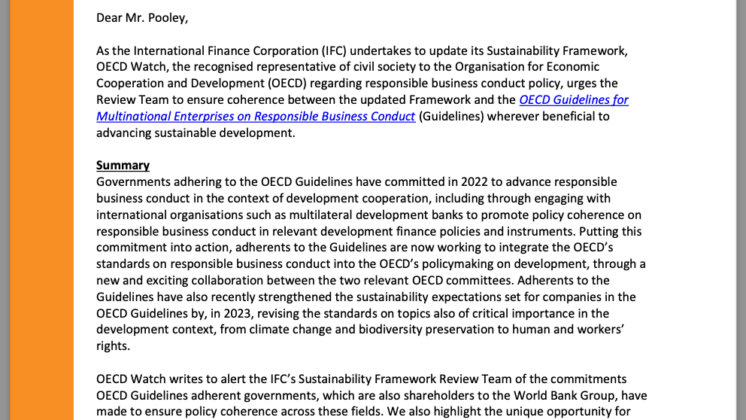
أرسل مكتب "أوإس إيه سي إيه واچ" رسالة مشتركة إلى مؤسسة التمويل الدولية (IFC) تطالب فيها بإعادة مراجعة إطارها الاستدامة ليتماشى مع مبادئ منظمة التعاون الاقتصادي والتنمية بشأن المعاملة التجارية المسؤولة، مما يرفع مستوى التزاماتها تجاه الشركات متعددة الجنسيات…

A new UN advice clarifies the application of the UN Guiding Principles on Business and Human Rights to key financial instrument of relevance to OECD Guidelines case involving UBS and Hikvision. In a letter to…