Diligence raisonnable

Due diligence is how companies should identifyand address harms to people and the planet connected to their business activities and those of business relations. We’re fighting for robust due diligence rules at the OECD and beyond.

Our work on due diligence

OECD Watch promotes effective, rights-centred due diligence that prevents and remedies harm rather than simply managing corporate risks.


What the OECD Guidelines say

The OECD Guidelines expect companies to carry out ongoing, risk-based due diligence across their whole value chain to:

  • Identify and assess actual and potential impacts on people, the environment, and other topics covered by the Guidelines
  • Prevent and mitigate potential harms, and cease and remedy harms that have occurred
  • Engage meaningfully with affected stakeholders throughout the due diligence process
  • Address impacts linked to their operations, products, services and business relationships, using their leverage to influence business partners where needed.

The Guidelines emphasise that due diligence should focus on the severity and likelihood of impacts to people and the planet, not the company, including people who may be particularly vulnerable or marginalised.

Get involved

Want to learn more about OECD Watch’s work on this issue? Get in touch with us to find out more about our advocacy and resources, or to discuss how the OECD Guidelines can support your work.

You can also join our civil society working group on due diligence legislative developments to connect with organisations working on this issue, exchange knowledge, and contribute to collective advocacy. Reach out to us directly.

Ressources associées

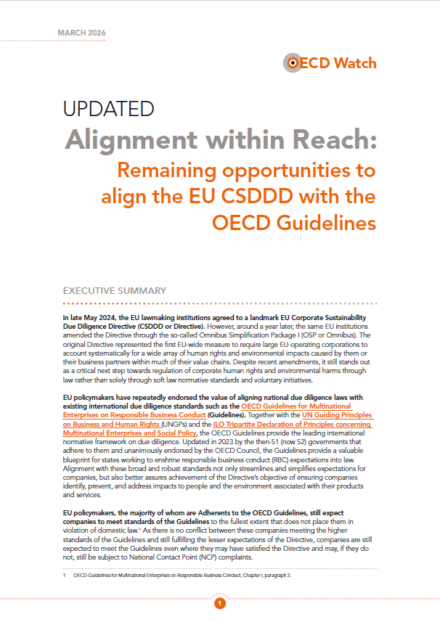
Due diligence factsheet

Get a practical overview of what the OECD Guidelines say about due diligence. Available in:

English

Arabic

French

Spanish

Portuguese

Thai


Using the OECD Due Diligence Guidance

Our briefing highlights the strongest elements of the OECD’s Due Diligence Guidance for Responsible Business Conduct and explains how civil society can use them in advocacy.


Read the briefing

Check out the OECD’s multi-sector and sector-specific due diligence guidance here.

Related NCP complaints

See complaints in which civil society has raised concerns about companies’ due diligence practices and failure to prevent or address harm.

See related complaints

How to use the Guidelines

The OECD Guidelines provide civil society with a framework for engaging companies, governments and other decision-makers on responsible business conduct. You can use the Guidelines to:

en savoir plus

Connected issues

Divulgation

How transparency about corporate impacts supports and is essential for accountability.

Policy coherence

Why governments should align sustainable business policies with the OECD Guidelines to ensure companies act responsibly.

Droits de l'homme

How companies can respect human rights, prevent harm and provide or contribute to remedy when harms occur.

Environnement

How companies can prevent and address environmental harm through responsible business conduct practices and due diligence.