50 ans des Lignes directrices de l’OCDE : contributions, limites et ce qui est nécessaire à l’avenir
Recommandations pour l’OCDE et les gouvernements membres concernant la mise en œuvre future des lignes directrices

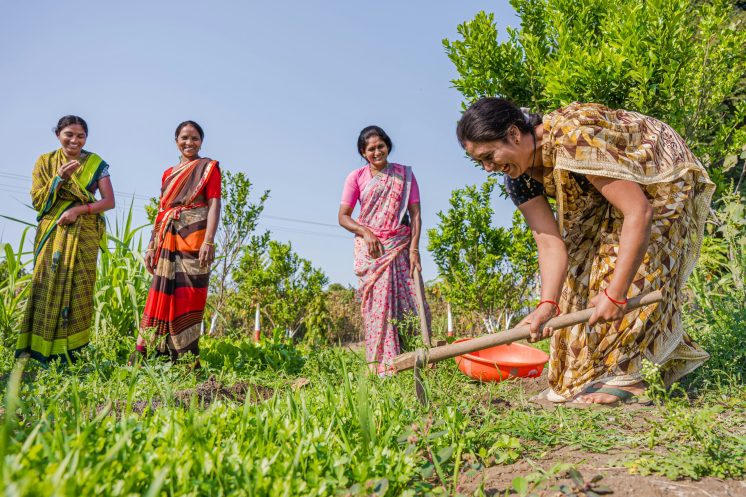

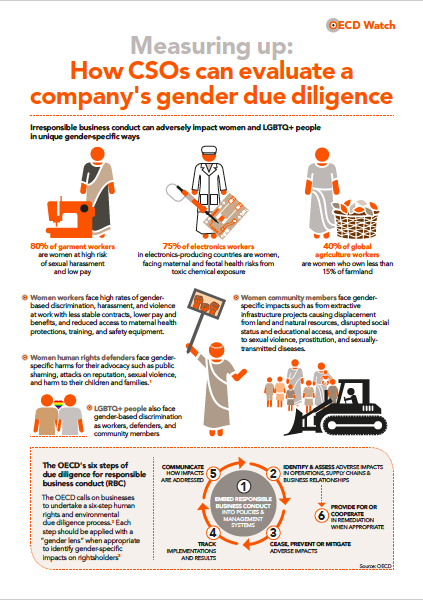
OECD Watch advocates for companies to integrate a gender perspective throughout their due diligence and responsible business conduct.
OECD Watch tracks complaints focused on harms to women. Our Guide to Gender Due Diligence helps civil society organisations assess whether companies are applying a gender lens to their due diligence. CSOs can use it when engaging with companies, advocating with governments, and filing NCP complaints.
We pushed to ensure the OECD Guidelines call on companies to take account of intersectionality in their human rights due diligence. We continue to call for focus on women’s and LGBTQI+ rights.
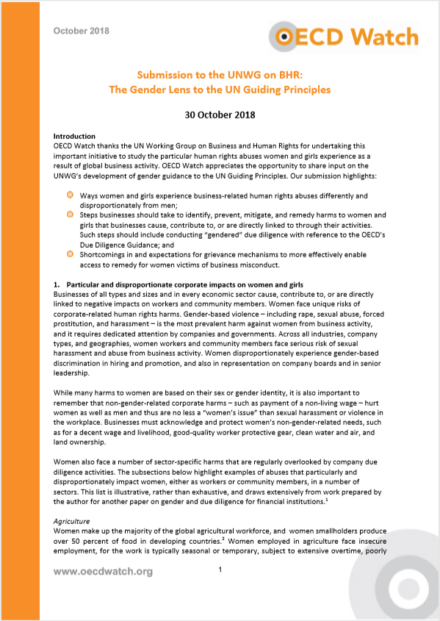
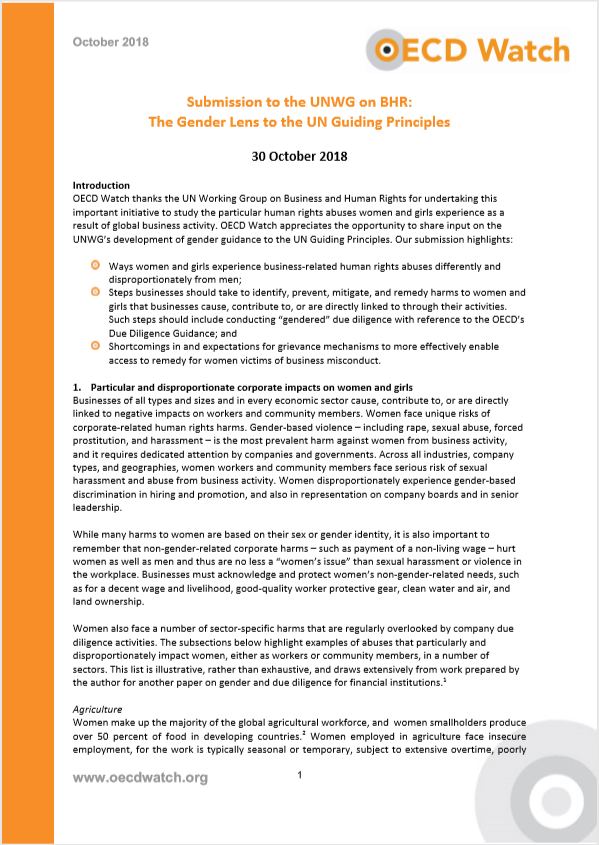
We have contributed to international discussions on applying a gender lens to the UN Guiding Principles on Business and Human Rights, highlighting both the disproportionate impacts women can experience from corporate activities and the barriers they can face in accessing remedy. We push for reflection on gender-specific impacts in wider corporate standards.

The OECD Guidelines expect companies to respect human rights and conduct due diligence that takes into account distinct and intersecting risks faced by people who may be particularly vulnerable or marginalised.
Companies should also communicate transparently about their gender-related impacts and the measures they are taking to address them.
A gender-responsive approach to due diligence means companies should:
Want to learn more about OECD Watch’s work on this issue? Get in touch with us to find out more about our advocacy and resources, or to discuss how the OECD Guidelines can support your work. Reach out directly.
Our practical guide helps civil society assess whether companies are meaningfully addressing gender-specific harms. It is available in:


Learn how gender-specific impacts can be addressed throughout the six steps of due diligence.

The OECD Guidelines provide civil society with a framework for engaging companies, governments and other decision-makers on responsible business conduct. You can use the Guidelines to:
Help communities and other affected people understand the standards companies are expected to meet and the rights and protections they can demand.
Use the Guidelines to talk to companies about their impacts and demand that they prevent, address and remedy harm.
Use the Guidelines to advocate for strong laws, policies and corporate practices that protect people and the planet and hold companies accountable.
When a company falls below the standards in the Guidelines, you can bring a complaint to an NCP and seek accountability and remedy.
How companies can respect human rights, prevent harm and provide or contribute to remedy when harms occur.
How companies should respect human rights defenders and prevent and remedy reprisals against those who speak out.
How companies should respect Indigenous Peoples’ rights, including collective rights to culture, self-determination, and free, prior and informed consent.
How companies should prevent harm to people’s land, housing and tenure rights and respect legitimate land rights.
How meaningfulengagement can ensure affected people have a voice in decisions that impact them.
How companies should respect workers’ rights across their operations and value chains, including freedom of association and collective bargaining.
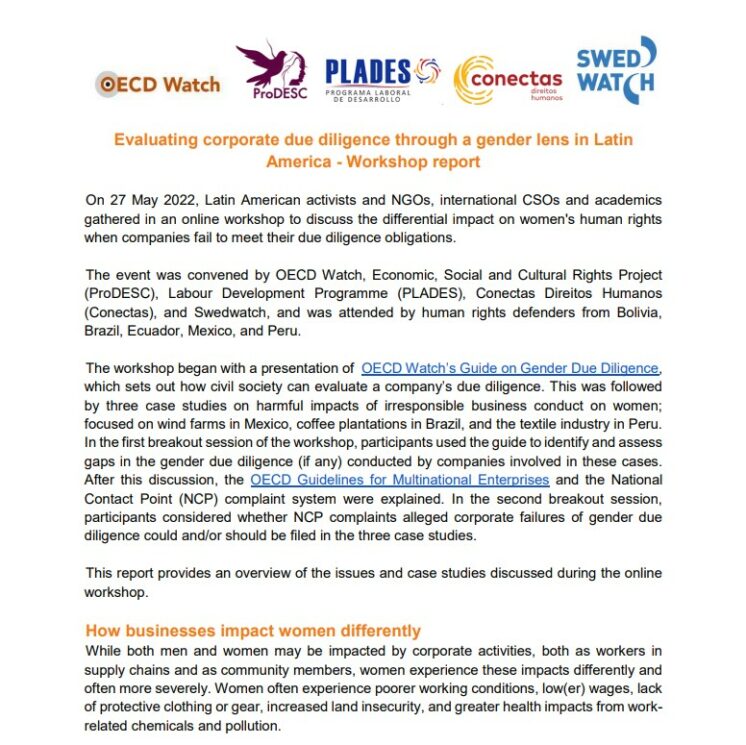

Español abajo Portugués abajo On 17 May 2022, OECD Watch and Latin American region members ProDESC (Mexico), Programa Laboral de Desarrollo (PLADES, Peru), Conectas Direitos Humanos (Brazil), with support of Swedwatch (Sweden) will hold…