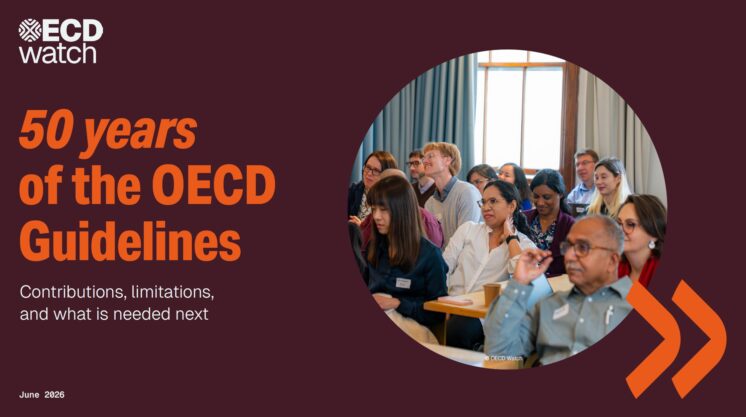
50 years of the OECD Guidelines: Contributions, limitations, and what is needed next
Recommendations for the OECD and member governments on the future implementation of the Guidelines



The OECD Guidelines provide civil society an important framework to raise concerns about business-related corruption and its wider impacts on people and the environment.
Corruption is notoriously difficult to tackle, but we help build complainants’ strategies to raise this claim where applicable.
We fought for broadened and deepened anti-corruption standards in the latest revision of the Guidelines and will continue to urge progress on anti-corruption implementation in future. We also helped secure improved expectations for NCPs on addressing conflicts of interest, and we will continue to monitor NCP performance on this.
As OECD Watch tracks development of responsible business conduct law and policy, we will look for ways to advance integration of anti-corruption standards.

The OECD Guidelines call on companies to establish strong systems to prevent, detect and address corruption. Companies should:
The Guidelines address corruption broadly and expect companies to consider its impacts as part of responsible business conduct and due diligence.
Want to learn more about OECD Watch’s work on this issue? Get in touch with us to find out more about our advocacy and resources, or to discuss how the OECD Guidelines can support your work. Reach out directly.
Get a practical overview of what the OECD Guidelines say about animal welfare. Available in:


See complaints in which corruption issues have been raised by civil society.

The OECD Guidelines provide civil society with a framework for engaging companies, governments and other decision-makers on responsible business conduct. You can use the Guidelines to:
Help communities and other affected people understand the standards companies are expected to meet and the rights and protections they can demand.
Use the Guidelines to talk to companies about their impacts and demand that they prevent, address and remedy harm.
Use the Guidelines to advocate for strong laws, policies and corporate practices that protect people and the planet and hold companies accountable.
When a company falls below the standards in the Guidelines, you can bring a complaint to an NCP and seek accountability and remedy.