(c) OECD

About the OECD

The Organisation for Economic Co-operation and Development (OECD) is an international organisation where governments work together on economic, social, and policy issues. Established in 1961, it has 38 member countries, with other countries participating in OECD standards and policy processes as partners or adherents. The OECD develops research, standards, policy recommendations, and other instruments that influence government policy around the world. Its work covers areas ranging from economic policy and development to trade, investment, and the environment. The OECD is a recognised global leader in establishing standards and policy recommendations on responsible business conduct.

How does the OECD work?

OECD member governments work through committees and working parties, where they develop policies, standards, and recommendations and exchange experiences. You can read more about these various committees on the OECD website.

For OECD Watch, the most important of these is the OECD Investment Committee, which is responsible for the OECD Guidelines for Multinational Enterprises on Responsible Business Conduct (OECD Guidelines).

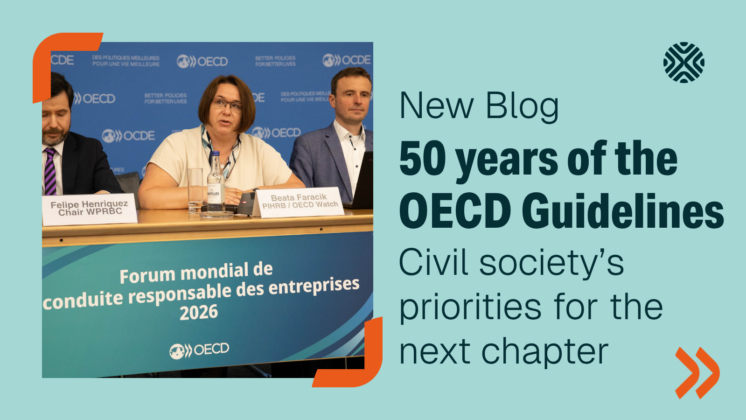
The Investment Committee hosts a Working Party on Responsible Business Conduct (WPRBC) which plays an important role in promoting the OECD Guidelines, strengthening the National Contact Point (NCP) system, fostering dialogue and policy recommendations on topics related to responsible business conduct.

Increasingly, other committees and working groups at the OECD are exploring applying an RBC lens to their work, such as the Development Assistance Committee and the Export Credits Group. OECD Watch is promoting integration of RBC principles into wider OECD policy development and engaging with these bodies and initiatives. More fundamentally, we are also working to elevate and formalise voice for civil society on issues relevant to business conduct across the OECD.


How does OECD Watch engage with the OECD?

OECD Watch is the official civil society advisory body to the OECD Investment Committee. Alongside the Trade Union Advisory Committee (TUAC) and Business at OECD (BIAC), we represent our respective constituencies within the OECD’s institutional framework for the Guidelines.

OECD Watch participates in consultations, meetings, and policy discussions and provides input to the OECD, NCPs, and governments on responsible business conduct. We use this access to bring civil society perspectives and the experiences of communities affected by business activities into OECD policy discussions.

The OECD Guidelines’ Implementation Procedures also give OECD Watch specific roles within the NCP system. Together with TUAC and BIAC, we can:

  • Request clarification from the Investment Committee on the interpretation of the OECD Guidelines, including whether an NCP has correctly interpreted the Guidelines in a complaint.
  • Make a substantiated submission to the Investment Committee concerning whether an NCP is fulfilling its responsibilities concerning its handling of specific instances.
  • Participate in the peer reviews of individual NCPs.

These mechanisms provide formal avenues for the OECD’s institutional stakeholder groups to raise questions about the interpretation of the Guidelines and the functioning of the NCP system.

Related resources

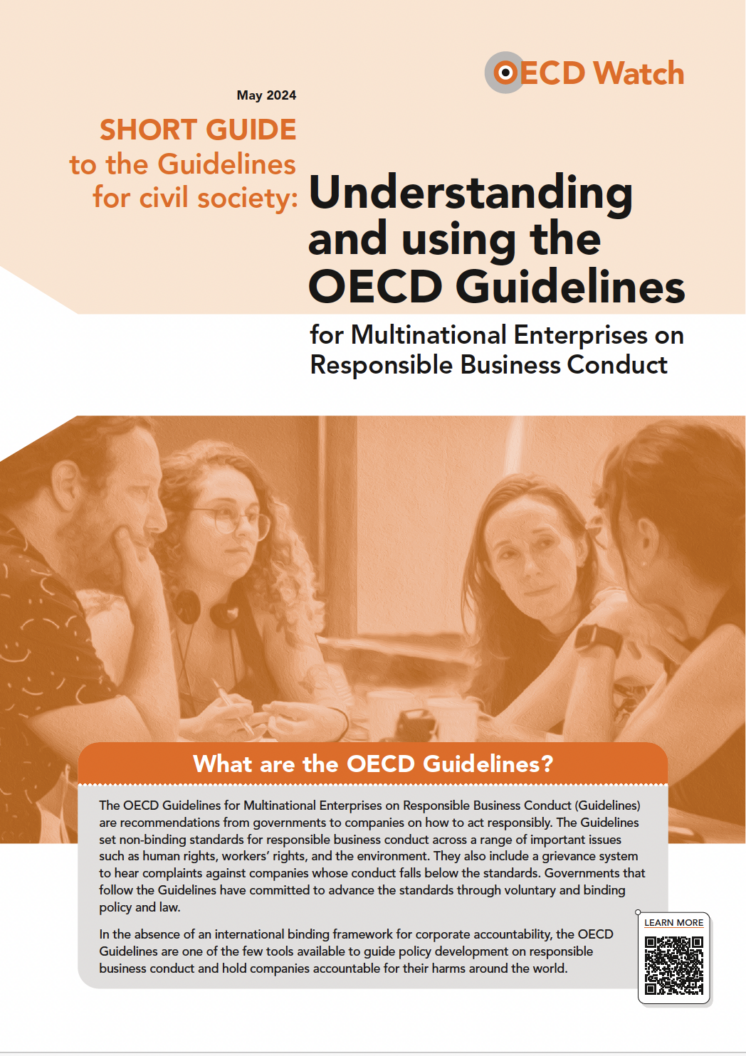
The OECD Guidelines

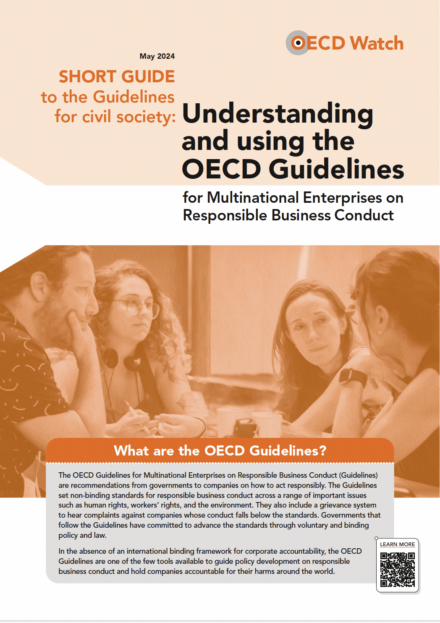
What are the OECD Guidelines and who do they apply to? Learn more about the responsible business conduct standards enshrined in the Guidelines and how civil society can use them.

OECD Accession explained

Learn how countries become OECD members and discover how civil society can engage in accession processes to push governments towards stronger responsible business conduct policies.

About NCPs 

National Contact Points (NCPs) are government-established offices that promote the OECD Guidelines and hear complaints against companies alleged not to have followed them.