
50 years of the OECD Guidelines: Contributions, limitations, and what is needed next
Recommendations for the OECD and member governments on the future implementation of the Guidelines



OECD Watch is actively working to ensure that the transition to sustainable economic models is truly just. We advocate for a rights-based and inclusive approach that puts affected workers and communities at the centre, addresses existing and historical harms, and ensures that the transition does not reproduce or create new injustices.
We guide complainants targeting all aspects of the transition, from failure of fossil fuel companies to meet climate commitments or clean up past harm, to human rights violations by companies in or fuelling the transition.
Building on new recognition of the just transition in the latest revision of the OECD Guidelines, we are contributing to the development of the OECD’s research and work on responsible business conduct for the just transition.
Through our due diligence and other policy advocacy work, we are pushing for stronger corporate and government action to put human rights, meaningful participation, and fair benefit-sharing at the heart of the transition.

The OECD Guidelines expect companies to take action to reduce their greenhouse gas emissions and environmental impacts while respecting human rights and addressing harms linked to their transition. Companies should:
The Guidelines also call on companies to avoid activities that undermine climate adaptation and the resilience of communities, workers and ecosystems.
The responsible business conduct standards set out in the Guidelines have been further explained within the context of the just transition in the OECD’s report, Responsible Business Conduct for a Just Transition: Protecting workers, communities and consumers in the low-carbon transition.
Want to learn more about OECD Watch’s work on this issue? Get in touch with us to find out more about our advocacy and resources, or to discuss how the OECD Guidelines can support your work.
You can also join our civil society working group on the just transition to connect with organisations working on this issue, exchange knowledge, and contribute to collective advocacy. Reach out to us directly.

Our practical guide helps civil society use the OECD’s paper on responsible business conduct for the just transition in advocacy and accountability efforts.

See complaints related to the context of the transition and companies’ responsibilities to transition in a just manner.

The OECD Guidelines provide civil society with a framework for engaging companies, governments and other decision-makers on responsible business conduct. You can use the Guidelines to:
Help communities and other affected people understand the standards companies are expected to meet and the rights and protections they can demand.
Use the Guidelines to talk to companies about their impacts and demand that they prevent, address and remedy harm.
Use the Guidelines to advocate for strong laws, policies and corporate practices that protect people and the planet and hold companies accountable.
When a company falls below the standards in the Guidelines, you can bring a complaint to an NCP and seek accountability and remedy.
How companies should reduce emissions, strengthen climate action and address the impacts of the transition on people and communities.
How companies should prevent and address environmental harm through responsible business practices and due diligence.
How companies should respect human rights, prevent harm and provide or contribute to remedy when harms occur.
How companies should respect Indigenous Peoples’ rights, including collective rights to culture, self-determination, and free, prior and informed consent.
In January 2024, the OECD’s Responsible Business Conduct Unit launched a multistakeholder project to develop a framework to guide businesses in supporting a Just Transition. To guide this process, the OECD has set up a…

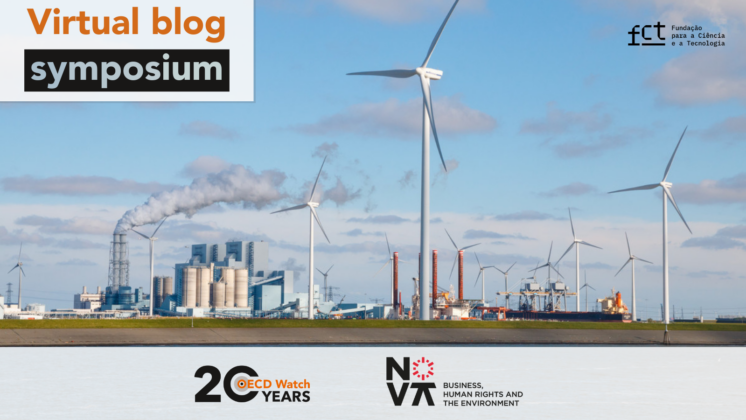
By Janneke Bazelmans and Isabelle Geuskens Blog symposium co-organised by OECD Watch and NOVA School of Law In the midst of the climate crisis, urgent action is paramount. We are in a race against…
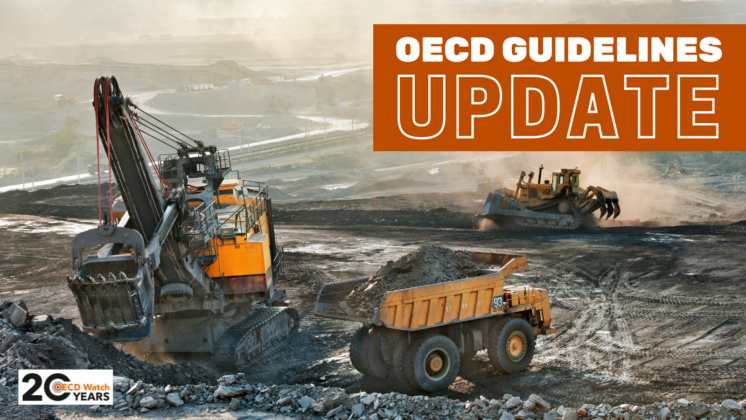
On 27 June 2023, OECD Watch participated in a webinar organised by the Institute for Policy Studies about options for challenging mining corporations at the international level. The webinar focused on the updated OECD Guidelines for…