OECD Watch’s submission for NCP Korea, Japan and Croatia’s peer reviews




Governments that adhere to the OECD Guidelines are required to establish an NCP. There are currently 52 NCPs around the world in OECD member countries and other countries that adhere to the Guidelines. NCPs can be organised in different ways depending on the country’s circumstances, but all are expected to operate with an equivalent degree of effectiveness, known as “functional equivalence”.
For civil society organisations and communities, NCPs can provide an avenue to raise concerns about corporate conduct, seek dialogue and mediation, and push for companies to address and remediate adverse impacts.
NCPs have three main functions.
The OECD gives governments flexibility in how they organise their NCP. An NCP may be located within a government ministry, operate across several government bodies, or involve independent experts and other stakeholders. Regardless of its structure, every NCP must meet the core effectiveness criteria. It should be:
OECD Watch assess NCP performance against these effectiveness criteria, as well as good practice across non-judicial grievance mechanisms, to help civil society understand how NCPs operate. Our evaluations show how individual NCPs perform in practice, including their organisation, promotion of the Guidelines, and handling of complaints. They highlight good practices as well as gaps that NCPs should address.
The OECD Working Party on Responsible Business Conduct and the OECD Investment Committee oversee the NCP system. Under the 2023 Implementation Procedures, NCPs are subject to mandatory periodic peer reviews designed to assess and strengthen their effectiveness. Additionally, the institutional stakeholders (OECD Watch, the Trade Union Advisory Committee, and Business at OECD) and an NCP itself may request clarification on whether an NCP has interpreted the Guidelines correctly in a specific instance, or raise a substantiated submission alleging that an NCP has not fulfilled its responsibilities in relation to handling a specific instance.
OECD Watch uses these processes, alongside research, advocacy, and engagement with NCPs and governments, to push for stronger and more effective NCPs that engage meaningfully with civil society, deliver legitimate access to remedy and support impactful policy dialogue within their countries
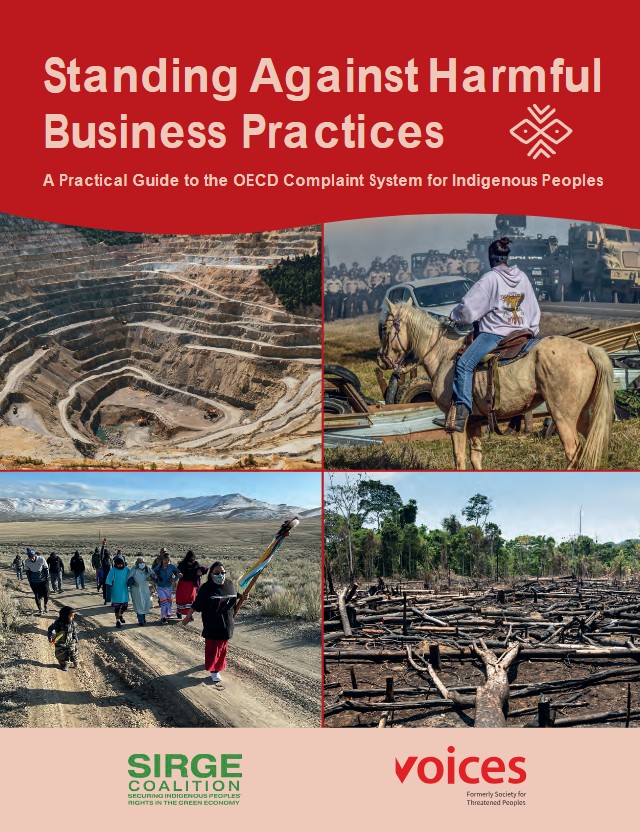
NCPs provide civil society organisations and communities, among other stakeholders, with a government-backed non-judicial mechanism to raise concerns about company impacts on people and the planet. A well-prepared NCP complaint can help bring companies to the table through dialogue and mediation, foster changes to corporate policies and practices, and enable remedy for negative impacts. On the other hand, because the complaint process is voluntary, a complaint may result in none of these things.
Before filing, CSOs should consider how to use the process strategically and effectively alongside other advocacy and accountability efforts. OECD Watch’s guidance provides practical advice on assessing whether an NCP complaint is appropriate, preparing a strong case, and making the most out of the process.

See how individual NCPs perform against key indicators covering organisation, promotion, and complaint handling. Use our evaluations to understand NCP strengths, weaknesses, and opportunities for improvement.

Planning to file an NCP complaint? Our step-by-step guide explains what to consider, how the process works, and how to prepare an effective complaint under the OECD Guidelines.

Explore our database of civil society and community NCP complaints worldwide. Follow case developments, compare experiences, and find insights into complaint outcomes and trends.