
50 years of the OECD Guidelines: Contributions, limitations, and what is needed next
Recommendations for the OECD and member governments on the future implementation of the Guidelines



OECD Watch works to strengthen corporate accountability for environmental and human rights impacts through our work on environmental due diligence, climate change, biodiversity, just transition and remedy.
Nearly half of all community-led NCP complaints are fighting climate harm. We provide strategic advice and track results to support wider change.
We advocate for standards for companies to prevent environmental harm rather than just remediate after the fact, to use science-based approaches and meaningful engagement, and to address the human rights impacts connected to environmental damage.
We encourage laws and policies that holistically address corporation’s human rights, environmental, and climate harms all at once. We support a transition to a sustainable economy that reduces environmental harm while protecting the rights and livelihoods of people affected by business activities.

The OECD Guidelines recognise a wide range of environmental impacts, including climate change, biodiversity loss, degradation of land and marine and freshwater ecosystems, deforestation, air, water and soil pollution, and poor management of waste and hazardous substances. Companies should:
Environmental protection under the Guidelines is closely connected to human rights. Environmental harm can affect people’s rights to health, food, water, land, housing, livelihoods and life, making effective prevention, participation and remedy essential.
Want to learn more about OECD Watch’s work on this issue? Get in touch with us to find out more about our advocacy and resources, or to discuss how the OECD Guidelines can support your work. Reach out to us directly.

See complaints in which environmental issues have been raised by civil society.

The OECD Guidelines provide civil society with a framework for engaging companies, governments and other decision-makers on responsible business conduct. You can use the Guidelines to:
Help communities and other affected people understand the standards companies are expected to meet and the rights and protections they can demand.
Use the Guidelines to talk to companies about their impacts and demand that they prevent, address and remedy harm.
Use the Guidelines to advocate for strong laws, policies and corporate practices that protect people and the planet and hold companies accountable.
When a company falls below the standards in the Guidelines, you can bring a complaint to an NCP and seek accountability and remedy.
How companies should reduce emissions, strengthen climate action and address the impacts of the transition on people and communities.
How companies should respect human rights, prevent harm and provide or contribute to remedy when harms occur.
How businesses should support a transition to sustainable economies that protect people, workers and communities.
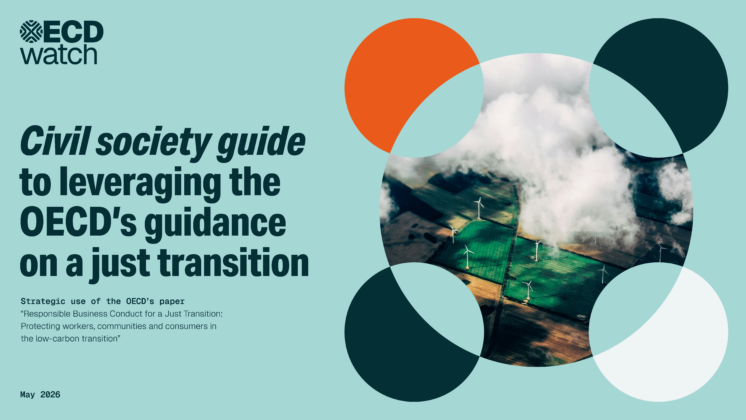

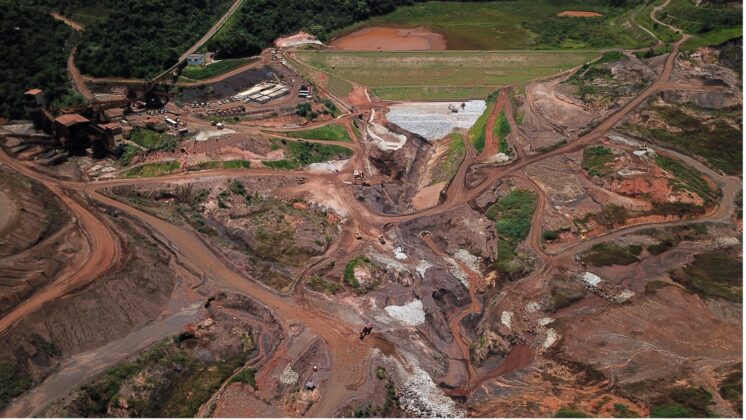
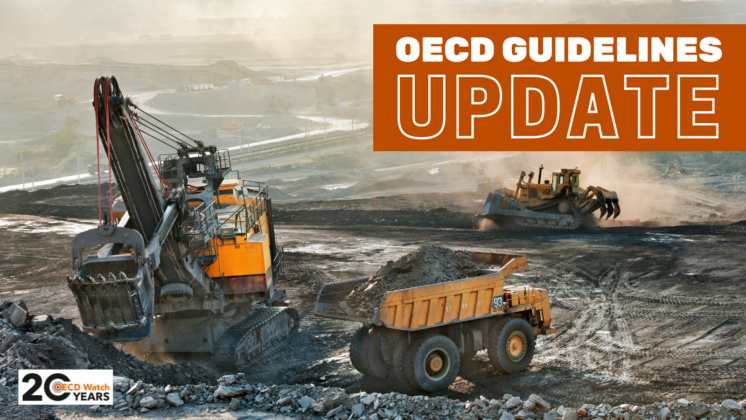
On 27 June 2023, OECD Watch participated in a webinar organised by the Institute for Policy Studies about options for challenging mining corporations at the international level. The webinar focused on the updated OECD Guidelines for…