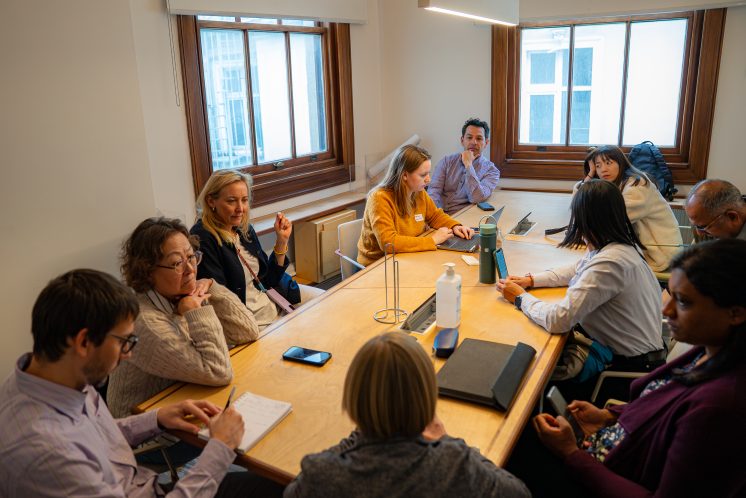
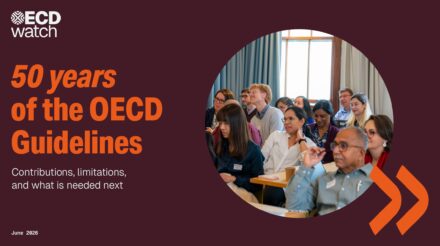
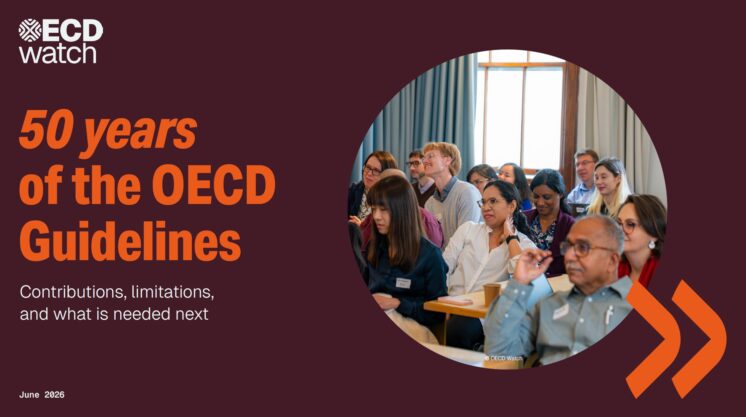
On 30 October 2026, OECD Watch brought together civil society organisations, trade unions, government representatives, academics, and other partners in Amsterdam to celebrate the 50th anniversary of the OECD Guidelines for Multinational Enterprises and mark a new chapter for OECD Watch as an independent charitable organisation.
The event “Collective Voices Shaping Accountability” – which is also the organisation’s new tagline – reflected on five decades of the OECD Guidelines, the progress made in advancing responsible business conduct (RBC), and the work still needed to turn international standards into meaningful change for people and the planet.
It was particularly special to welcome both old and new friends of OECD Watch, including many people who helped establish the organisation nearly 25 years ago and who have contributed to its work and impact over the decades. Their experiences and collective knowledge have helped strengthen civil society’s influence in the OECD and make the often-complex world of OECD policy and responsible business conduct more accessible.
Reflecting on progress and looking ahead
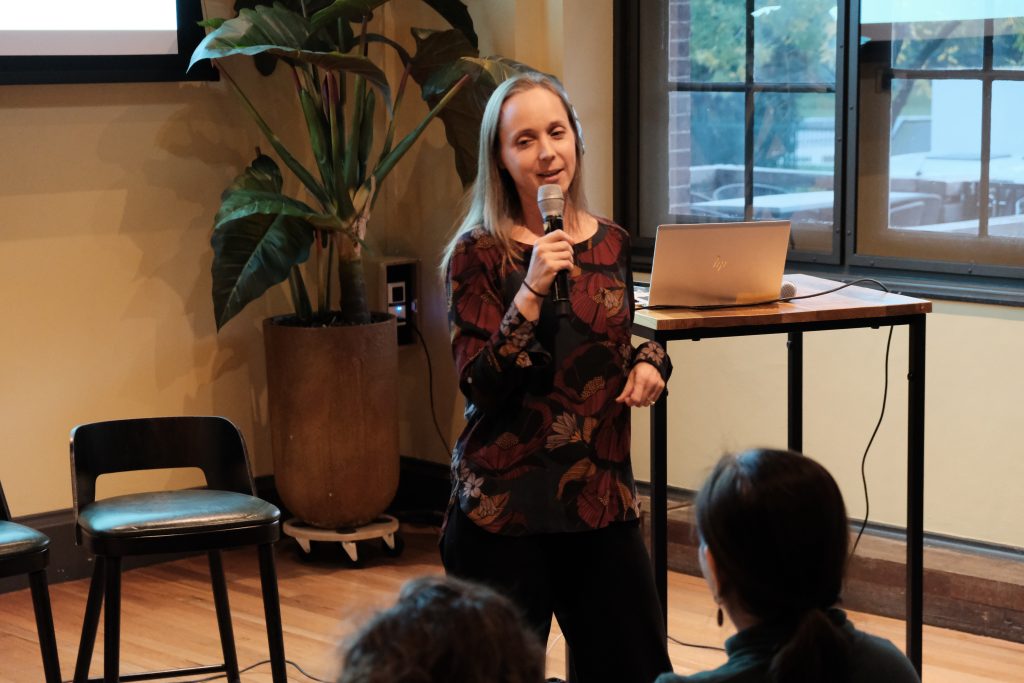
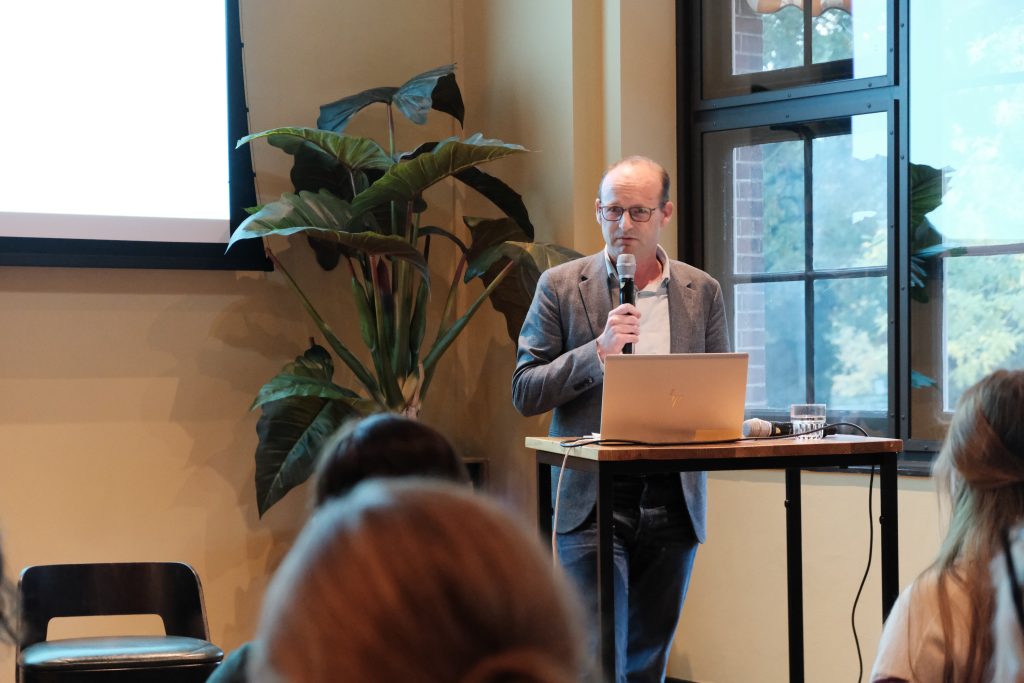
The programme opened with Dr. Kari Otteburn, Senior Researcher at the Leuven Centre for Global Governance Studies, who reflected on how the corporate accountability landscape has evolved over the past 50 years and the role of the OECD and its Guidelines in shaping expectations of responsible business conduct.
Joris Oldenziel, Executive Director of the International Accord and independent member of the Dutch National Contact Point (NCP), followed with a trip down memory lane, reflecting on OECD Watch’s beginnings and its contributions to strengthening the Guidelines, advocating for more effective and robust NCPs, and amplifying civil society voices across the board.
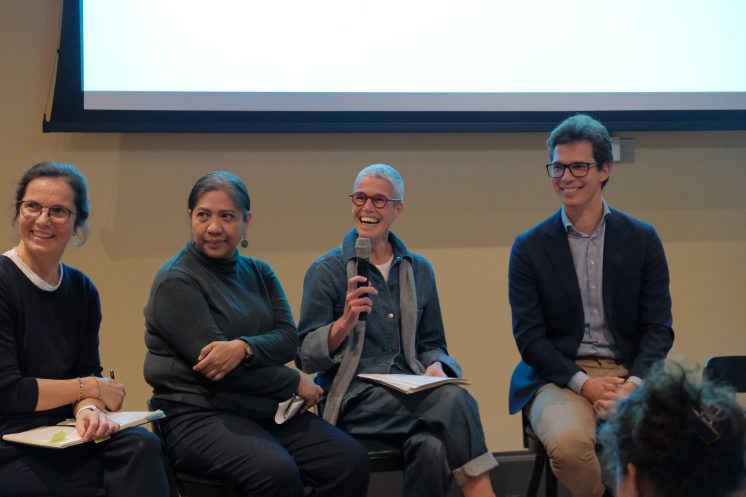
The event continued with a multi-stakeholder panel discussion on the future of corporate accountability and the role of civil society, moderated by Joseph Wilde Ramsing, Advocacy Director at SOMO. Panellists Bart Devos (Responsible Business Alliance), Andrea Fromm (Trade Union Advisory Committee to the OECD – TUAC), Basak Baglayan (Luxembourg National Contact Point for Responsible Business Conduct) and Carmina Obanil (Community Resources Exchange/Coalition for Human Rights in Development) brought perspectives from business, trade unions, government and affected communities.
The discussion explored the challenges and opportunities facing responsible business conduct today, including changing political and economic conditions, the future of corporate sustainability regulation, and the need to keep businesses focused on implementation and real-world impact. Panellists also reflected on the pressures facing workers across global value chains, the challenges experienced by affected communities, and the role governments can play in strengthening responsible business conduct through their policies and practices.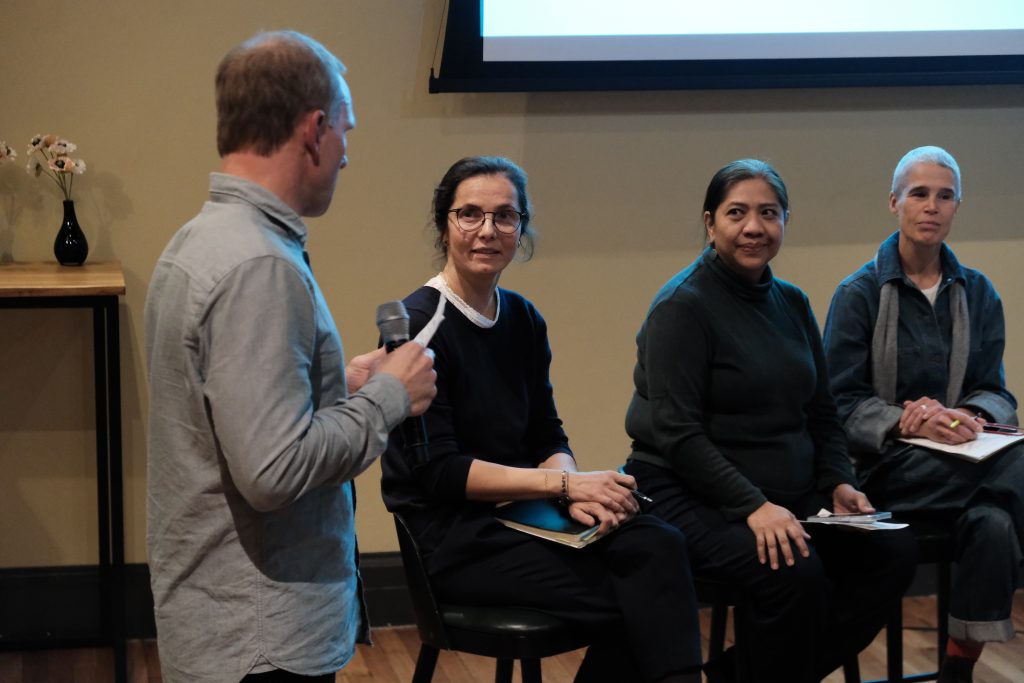
Key messages for the future
Across the speeches and panel discussion, several messages stood out. First, there are good reasons for hope. The ongoing efforts of workers and communities fighting for their rights remain a powerful source of inspiration. Standing in solidarity with those on the frontlines of corporate harm is not only essential to advancing accountability, but also a source of collective strength.
There was also recognition of how far we have come. Over the past five decades, the OECD Guidelines have helped shape expectations of responsible business conduct, while civil society activism and multi-stakeholder collaboration have played an important role in pushing corporate accountability further up the agenda.
But significant challenges remain. The gap between international standards and their effective implementation continues to be a central concern. Ensuring that commitments translate into meaningful outcomes for workers, communities and the environment will require continued pressure, stronger implementation and collaboration across stakeholder groups.
OECD Watch’s next chapter
The event also marked an important milestone in OECD Watch’s own journey: its launch as an independent charitable organisation, registered in the Netherlands.
For nearly 25 years, OECD Watch has been hosted by its member organisations in the Netherlands. Moving towards independence marks an important next step in OECD Watch’s development. As a standalone NGO, OECD Watch is building its own organisational foundations and strengthening its capacity to grow its expertise, expand its impact and serve its global civil society network and partners over the long term.
This new chapter builds on nearly a quarter-century of experience, relationships and knowledge developed through OECD Watch’s work with civil society organisations around the world. Our role remains as important as ever: helping civil society navigate the often-complex OECD system, engage with the OECD Guidelines and National Contact Points, and use these mechanisms to push for stronger corporate accountability.
As an independent organisation, OECD Watch aims to build on this legacy while strengthening its ability to bring civil society voices into international policy discussions, advocate for more effective responsible business conduct standards, and support efforts to secure meaningful access to remedy for people and communities affected by corporate harm.
Thank you to all our speakers, panellists, members, partners and guests who joined us in Amsterdam and have contributed to OECD Watch’s journey. We look forward to continuing this work together.